
When a child is born, he or she cannot speak. But as these little bundles of joy and sin begin to develop, they learn not only to speak but also that there is a world beyond their simple existence of eating, sleeping and pooping. Observing the world, a child learns there are others and quickly distinguishes between himself or herself and everyone else. This is the child’s first experience of “self-differentiation.” One of the first words a self-differentiated child learns to say is “Mine!” Picture a toddler playing with a stuffed animal. A sibling reaches for it, and the child impulsively grabs it back and defiantly declares, “Mine!” Independence seems innate.
As the child continues to develop, he or she learns another word that reflects another inborn impulse: “More!” The applesauce in the bowl runs out, and the child shouts at Mom, “More!” Natural to every child are the impulses toward independence and acquisition. “Mine!” and “More!”
As the child grows, he or she begins to make better sense of the social order and bumps into other little humans just like them, filled with the same “Mine!” and “More!” impulses. At preschool the child notices other children getting to do things he or she cannot do, and another spontaneous urge bubbles up from deep within and turns into words: “That’s not fair!” This inclination settles deep in a child’s soul. While the urge for “Mine!” and “More!” tames a bit with maturity (or at least hides itself better), the cry “That’s not fair!” dies a much slower public death. Selfishness (“Mine!” “More!”) is unbecoming even in the most self-centered of settings, but the desire for fairness runs deep in our culture and is even celebrated.
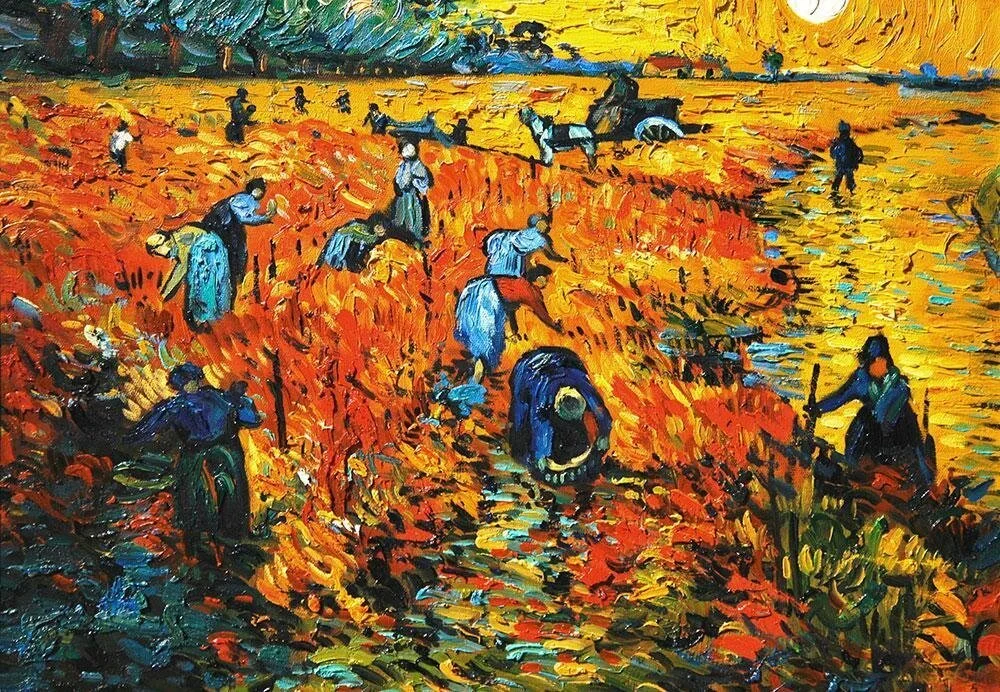
So, Jesus told a story about a landowner who hired day laborers to work in his vineyard. He hired some first thing in the morning, then more at 9:00 a.m., at noon, at 3:00 p.m., and, unbelievably, at 5:00 p.m., one hour before quitting time. The landowner made it clear, “I’ll pay you whatever is right.” When the whistle blew to signal the end of the workday, the landowner shocked everyone by telling his foreman to pay those who had worked only one hour first. Even more shocking, he paid them a full day’s wage. The workers who had labored all day must have thought, “We’ve hit pay dirt! Imagine what we’re going to get!” But no. The foreman paid everyone the same. And that deep inner impulse learned in preschool traveled through the neural pathways of those exhausted, all-day workers, sent a signal to their mouths, and out came the words: “That’s not fair!” Matthew 20:12 (NLT) records it this way: “Those people worked only one hour, and yet you’ve paid them just as much as you paid us who worked all day in the scorching heat.”
In Jesus’ story, the landowner responds (rather than reacts) to their complaint: “Friend, I haven’t been unfair! Didn’t you agree to work all day for the usual wage? Take your money and go. I wanted to pay this last worker the same as you. Is it against the law for me to do what I want with my money? Should you be jealous because I am kind to others?” (Matthew 20:13-15 NLT). Generosity and kindness are the landowner’s prerogative. It is his right to be unfair with grace.
What was the point of Jesus’ story? I think it is simply this: grace isn’t fair. God’s love for us, individually and collectively, does not add up. The math is wonky. Work all day and you get a day’s wage. Work one hour and you get a prorated amount. That’s fair. But in “the Kingdom of Heaven” (Jesus’ parable begins, “For the Kingdom of Heaven is like…”), God does not pay on a pro rata basis. So, to the repentant thief hanging on the cross, Jesus graciously (and quite unfairly) says, “I assure you, today you will be with me in paradise” (Luke 23:43 NLT). That ain’t fair!
British pastor and theologian Michael Green commented on the meaning of this parable: “The point of the story is plain. Length of service and long hours of toil in the heat of the day constitute no claim on God and provide no reason why he should not be generous to those who have done less. All human merit shrivels before his burning, self-giving love. Grace, amazing grace, is the burden of this story.” (Michael Green, The Message of Matthew: The Kingdom of Heaven)
Tellingly, what follows this story in Matthew’s biography of Jesus is Jesus, the disciples’ storytelling Rabbi, making it crystal clear what his mission on planet Earth was. Right after this story about the unfairness of grace, Jesus says, “Listen…we’re going up to Jerusalem, where the Son of Man will be betrayed to the leading priests and the teachers of religious law. They will sentence him to die. Then they will hand him over to the Romans to be mocked, flogged with a whip, and crucified. But on the third day he will be raised from the dead.” (Matthew 20:18-19 NLT). Grace isn’t fair. It would cost Jesus everything, as his “burning, self-giving love” was poured out on Calvary’s cross.
Matthew continues his account of the life and ministry of Jesus with the real-life story of the time the mother of James and John (colorfully known as “the sons of thunder”) came to Jesus to bid for the seats of honor in his Kingdom. This well-meaning mother misunderstood not only the kind of Kingdom Jesus was establishing but also its values. Honor in Jesus’ Kingdom is found not in the seats to the right and left of the one in charge, but in humble, sacrificial service to others. And to add insult to injury, when the other disciples heard about the request, they were “indignant,” not so much because they were aghast at its selfishness, but more likely because James and John’s mom had beaten them to the punch. They wanted the places of honor too. None of the disciples yet grasped this Kingdom value: grace isn’t fair.
Matthew is careful to place these three sections back-to-back. Jesus’ parable about unfair grace, his declaration of his coming suffering, death and resurrection, and the disciples’ jockeying for power in their warped understanding of his Kingdom all point to our contemporary struggle with merit and reward. We want grace the old-fashioned way. We want to earn it. Yet grace, in the words of Brennan Manning, is “vulgar.” Near the end of his life, Manning wrote his memoir, and in a passage that rivals Scripture for me, he beautifully describes the unfairness of grace:
“My life is a witness to vulgar grace—a grace that amazes as it offends. A grace that pays the eager beaver who works all day long the same wages as the grinning drunk who shows up at ten till five. A grace that hikes up the robe and runs breakneck toward the prodigal reeking of sin and wraps him up and decides to throw a party no ifs, ands, or buts. A grace that raises bloodshot eyes to a dying thief’s request—“Please, remember me”—and assures him, “You bet!” A grace that is the pleasure of the Father, fleshed out in the carpenter Messiah, Jesus the Christ, who left His Father’s side not for heaven’s sake but for our sakes, yours and mine. This vulgar grace is indiscriminate compassion. It works without asking anything of us. It’s not cheap. It’s free, and as such will always be a banana peel for the orthodox foot and a fairy tale for the grown-up sensibility. Grace is sufficient even though we huff and puff with all our might to try to find something or someone it cannot cover. Grace is enough. He is enough. Jesus is enough.” (Brennan Manning with John Blase, All Is Grace: A Ragamuffin Memoir)
It’s true. Grace ain’t fair, and we should be grateful.